
Categories
divorcePublished July 4, 2026
Common Divorce Mistakes in Ontario | Clear Guidance for Your Next Step

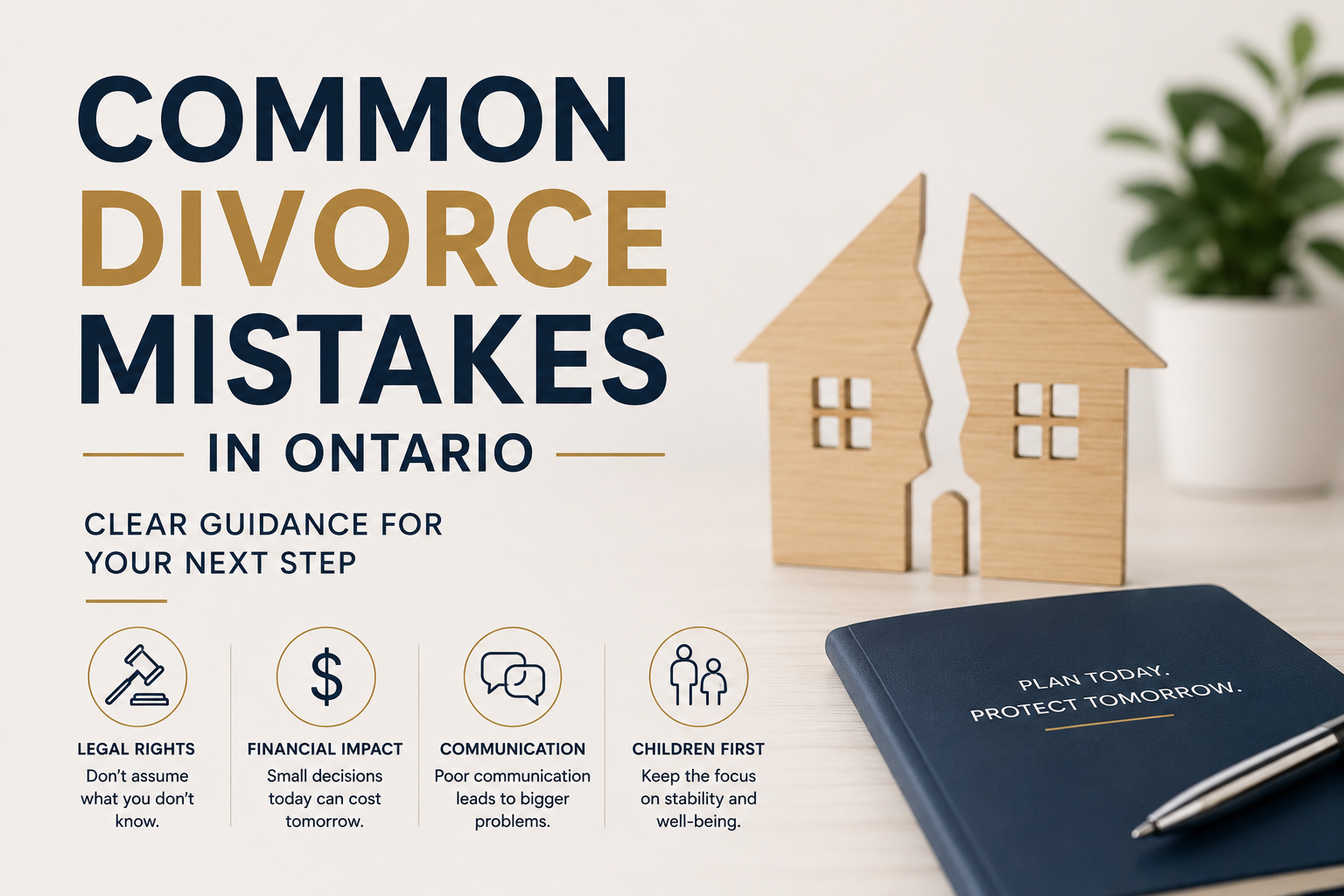
Common Divorce Mistakes in Ontario
Divorce is one of the biggest life changes a person can go through. It can affect your emotions, your finances, your children, and your plans for the future. During a divorce in Ontario, it is easy to make quick decisions when stress is high. Some of those choices can have long-term effects.
Understanding the most common divorce mistakes can help you move through the process with more clarity, more confidence, and the right support.
1. Letting Emotions Take Over
Divorce can bring up anger, sadness, fear, and frustration. Those feelings are completely normal, but they can make decision-making harder. When choices are driven by emotion instead of long-term goals, the process often becomes more difficult, more expensive, and more painful for everyone involved.
Taking a step back and focusing on the future can help you make decisions that support stability and peace of mind.
2. Focusing Only on the Present
Many people focus on immediate concerns without thinking about what life will look like after the divorce is final. In Ontario, divorce can involve important financial issues such as the matrimonial home, equalization of net family property, support payments, pensions, debt, and tax considerations.
Looking at the bigger picture can help you avoid financial problems later and make choices that better support your long-term future.
3. Not Being Fully Open About Finances
Full financial disclosure is an important part of the divorce process in Ontario. Missing records, incomplete information, or hidden assets can create conflict, delay progress, and lead to legal consequences.
A fair and lasting agreement starts with honest, accurate financial information. Being organized and transparent from the beginning can help reduce stress and support a smoother process.
4. Assuming Court Is the Only Option
Some couples believe they have no choice but to go to court. In many cases, mediation or collaborative family law may offer a more respectful, efficient, and less stressful way to resolve issues.
These options are not right for every situation, especially where there are safety concerns or serious power imbalances. But for many families, they can reduce legal costs, improve communication, and create a better foundation for co-parenting.
5. Trying to Handle Everything Alone
Divorce often brings legal, financial, and emotional questions all at once. Trying to manage everything without support can make an already difficult time feel even more overwhelming.
Working with the right professionals, such as a family lawyer, mediator, financial advisor, therapist, or other trusted expert, can help you better understand your options and avoid costly mistakes.
6. Forgetting to Plan for Life After Divorce
Divorce is not just a legal ending. It is also the beginning of a new chapter. Parenting arrangements, finances, routines, living situations, and relationships may all change.
Preparing for life after divorce is just as important as getting through the legal process. Taking time to think about what comes next can help you feel more grounded and more prepared for the transition ahead.
Moving Forward with Clarity and Support
Every divorce is different, and there is no perfect way through it. But with careful planning, honest financial disclosure, and the right support, it is possible to avoid common mistakes and make decisions that protect your future.
If you are going through a divorce in Ontario, understanding your options is an important first step. Clear guidance and thoughtful decisions can make the process feel more manageable and help you move forward with greater confidence.

Austin Keitner
| The Keitner Group | Keller Williams Referred Urban
or another way